
Solar Panels Cape Breton, Nova Scotia
Solar PV and battery storage for homes across the island. CBRM properties, Inverness County, and Victoria County all benefit from active PACE financing options and growing installer presence.
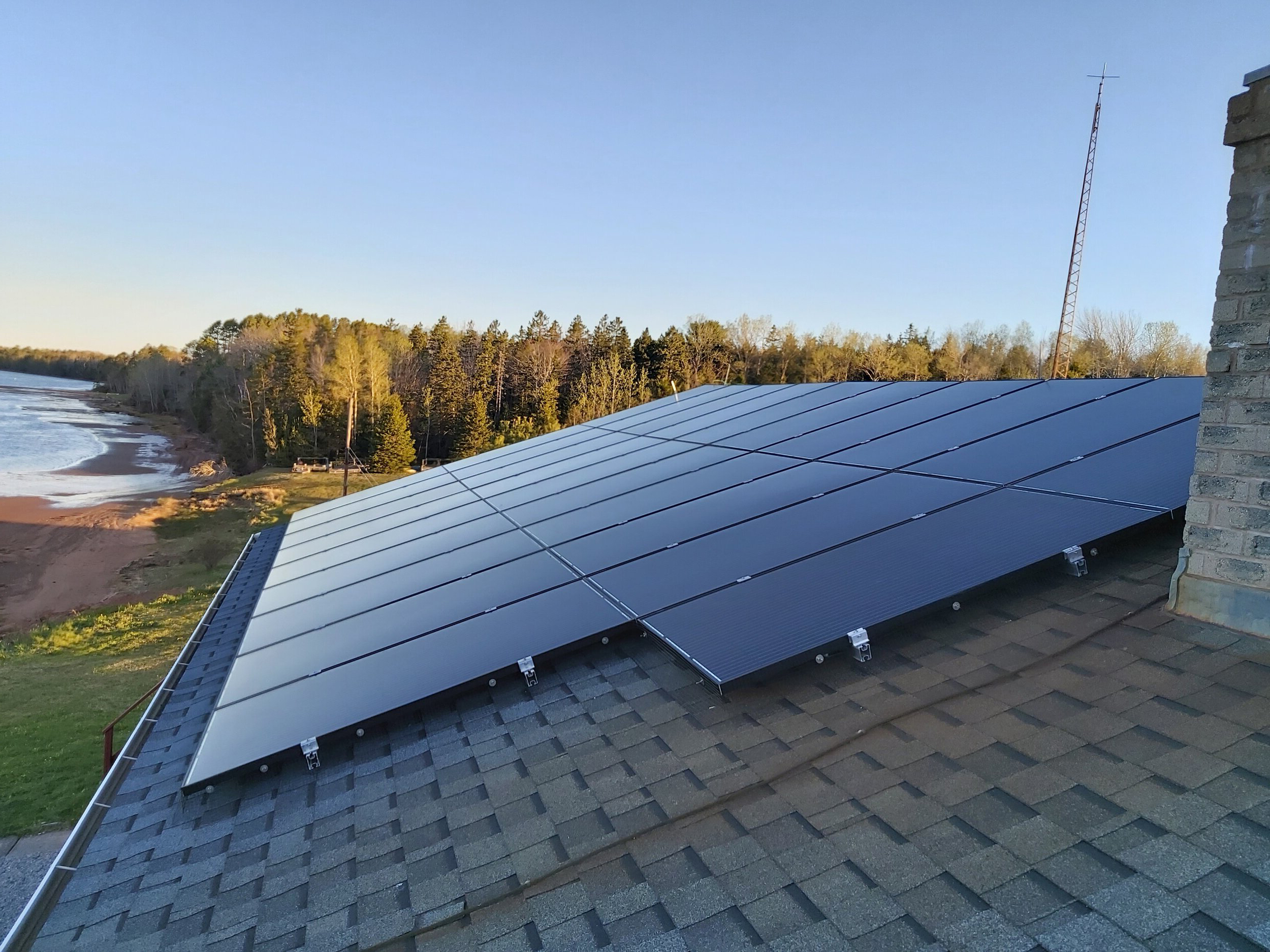
Why the Island Is the Strongest Case for Solar + Battery in Canada
The four municipalities that make up Cape Breton each have distinct characteristics for residential solar. The Cape Breton Regional Municipality (CBRM, encompassing Sydney, Glace Bay, New Waterford, and surrounding communities) is the population centre. Inverness County, Victoria County, and the Municipality of the County of Richmond cover the rural balance of the island.
The case for solar here is straightforward but the case for solar + battery is exceptional. Atlantic storms route through the island with remarkable consistency, rural feeders are long and exposed, and NS Power restoration priority appropriately focuses on the densest population centres first. Multi-day outages for rural Cape Breton properties are an annual occurrence, often more than once per year. Pairing solar with a 15 kWh to 30 kWh battery system is no longer a luxury upgrade for many island homeowners, it is essential infrastructure.
PACE Financing Programs by Municipality
Each county runs its own program through Clean Foundation's Clean Energy Financing framework. Inverness County offers PACE financing for residential solar upgrades. Victoria County runs a $20,000 cap, 10-year term program. CBRM has been participating in regional clean-energy financing initiatives, with terms set municipally. We help confirm exactly which program applies to your specific address before any commitment.
Production Expectations for the Island
According to NRCan production data, properly oriented south-facing solar on the island produces roughly 1,060 to 1,090 kWh per kW installed annually, slightly lower than HRM due to higher average cloud cover. A 12 kW system here generates approximately 12,800 kWh per year, enough to fully offset a typical island household running a heat pump and electric water heater.
Why Larger Systems Are Common Here
Island homes tend toward larger physical footprints, more electric heating load (heat pumps and electric baseboards are widespread), and longer winters with more lighting demand. As a result, properly sized solar systems for Cape Breton residences average 11 to 14 kW rather than the 8 to 10 kW more typical of HRM. Combined with battery storage, the all-in cost tends to be in the $42,000 to $58,000 range for a complete solar + battery package.
What We Help With
Residential Solar →
Rooftop solar PV systems sized to your actual NS Power usage. 5 to 20 kW with Tier-1 panels and microinverters.
Battery Storage →
Tesla Powerwall, Enphase IQ, and Franklin batteries for storm backup and solar self-consumption.
Solar + Battery →
Integrated systems designed together for optimal sizing, single warranty, and seamless storm operation.
Commercial Solar →
30% federal Clean Tech ITC eligible commercial installs for NS businesses, farms, and non-profits.
Installation Process →
Permits, structural, electrical, NS Power Net Metering Application, inspection, and commissioning.
Other Communities We Serve
New Glasgow →
Pictou County hub, just across the Canso Causeway. Town of New Glasgow participates in Clean Energy Financing.
Truro →
Central NS hub roughly 3 hours away by car. SolarColchester PACE serves Colchester County properties.
Halifax →
The HRM metro to the south. Solar City PACE at 4.75% / 10 years remains the urban benchmark for the province.
Common Questions From Island Homeowners
Get Your Cape Breton Solar Estimate
Send a recent NS Power bill. We will model your roof, factor in your county's PACE options, and email you transparent numbers within a week.
Or call directly: (902) 707-5253